
Solana Explained to Better Understand Its Potential
Introduction
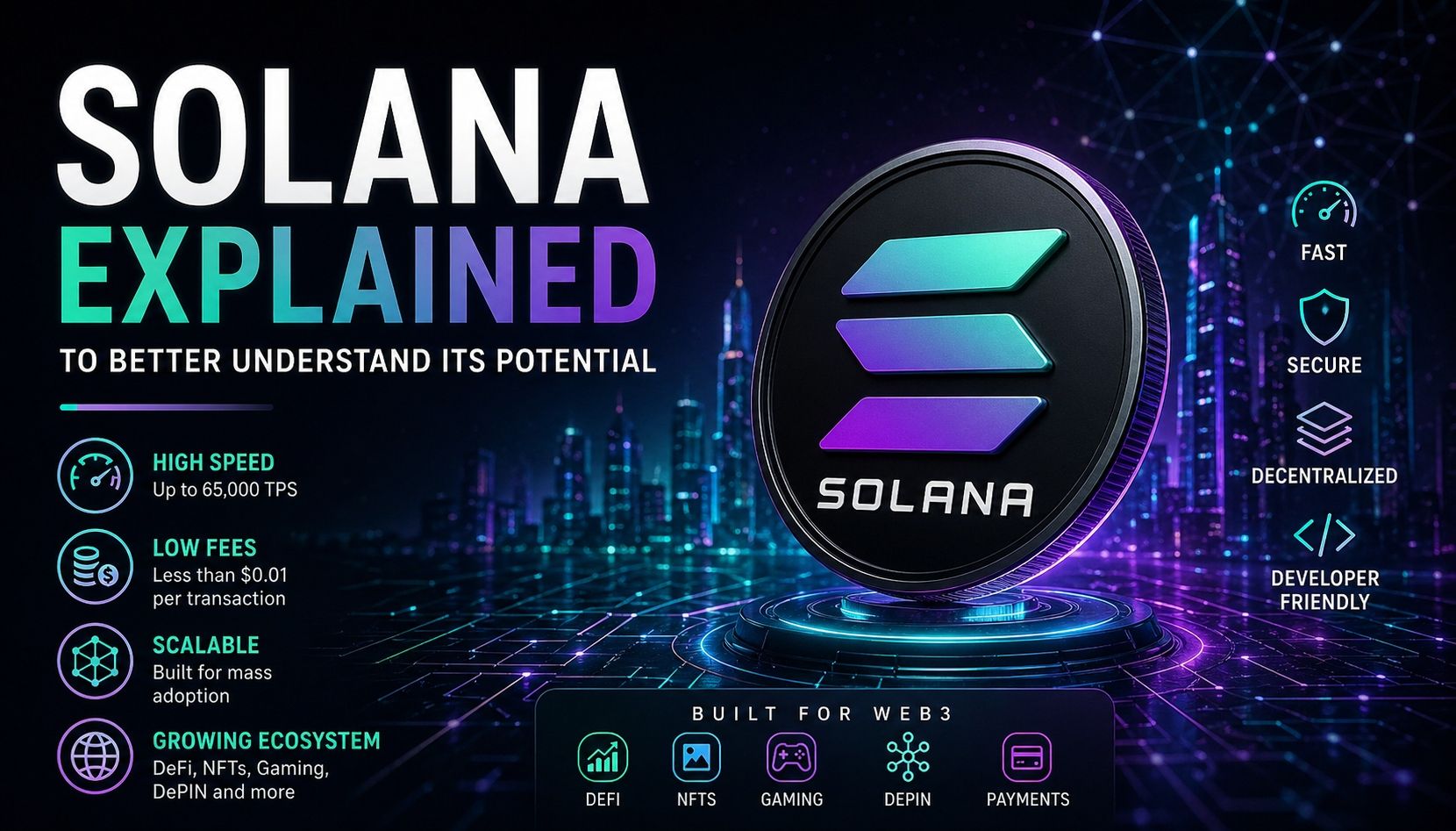
In the rapidly evolving world of blockchain technology, understanding how different networks operate is essential. This Solana explained guide offers a complete and up-to-date overview of one of the fastest-growing ecosystems in crypto. Whether you’re an investor, developer, or simply curious, understanding Solana can help you better evaluate its long-term potential.
This updated Solana explained guide reflects the current state of the network, including its technology, ecosystem, and adoption in 2026.
What Is Solana?
To fully understand this Solana explained guide, we need to go beyond a simple definition. Solana is not just another blockchain—it is a high-performance infrastructure designed to support the next generation of decentralized applications at scale.
Launched in 2020, Solana was created by Anatoly Yakovenko with a clear objective: solve the blockchain trilemma—scalability, security, and decentralization—without heavily compromising on any of these aspects. While many networks struggle to balance these three elements, Solana approaches the problem through a radically different architecture.
At its core, the Solana blockchain is a Layer 1 network, meaning it operates independently rather than relying on another blockchain. It is designed to handle a massive number of transactions while maintaining extremely low fees. This makes it particularly attractive for applications that require high throughput, such as trading platforms, gaming ecosystems, and real-time financial services.
One of the key ideas behind Solana is to make blockchain technology feel as seamless as traditional internet applications. In many cases, users interacting with Solana-based apps don’t even notice they are using blockchain technology. This is a major step toward mainstream adoption.
Another important element in this Solana explained overview is its focus on efficiency. Unlike older blockchains that rely on slower consensus mechanisms, Solana integrates multiple innovations that work together to maximize performance. These include Proof of History, parallel processing, and optimized data propagation across the network.
Solana is also known for its rapidly growing ecosystem. Over the past few years, it has become home to hundreds of projects across various sectors:
- Decentralized finance (DeFi)
- NFTs and digital collectibles
- Blockchain gaming
- Decentralized social networks
- DePIN (Decentralized Physical Infrastructure Networks)
This diversity of use cases highlights Solana’s ambition: to become the backbone of Web3 infrastructure.
From a user perspective, one of Solana’s biggest advantages is its cost efficiency. Transactions typically cost a fraction of a cent, which opens the door to entirely new types of applications, such as microtransactions, streaming payments, and high-frequency trading.
From a developer standpoint, Solana offers powerful tools and flexibility. Developers can build complex applications that would be difficult or too expensive to run on slower blockchains.
However, understanding Solana also means recognizing its trade-offs. Its high-performance design requires more powerful hardware for validators, which has sparked debates about decentralization. Despite this, the network continues to evolve, with ongoing improvements aimed at increasing resilience and accessibility.
Ultimately, this Solana explained section shows that Solana is more than just a fast blockchain—it is a complete ecosystem designed for scalability, usability, and real-world adoption.
Solana Explained: How Does It Work?
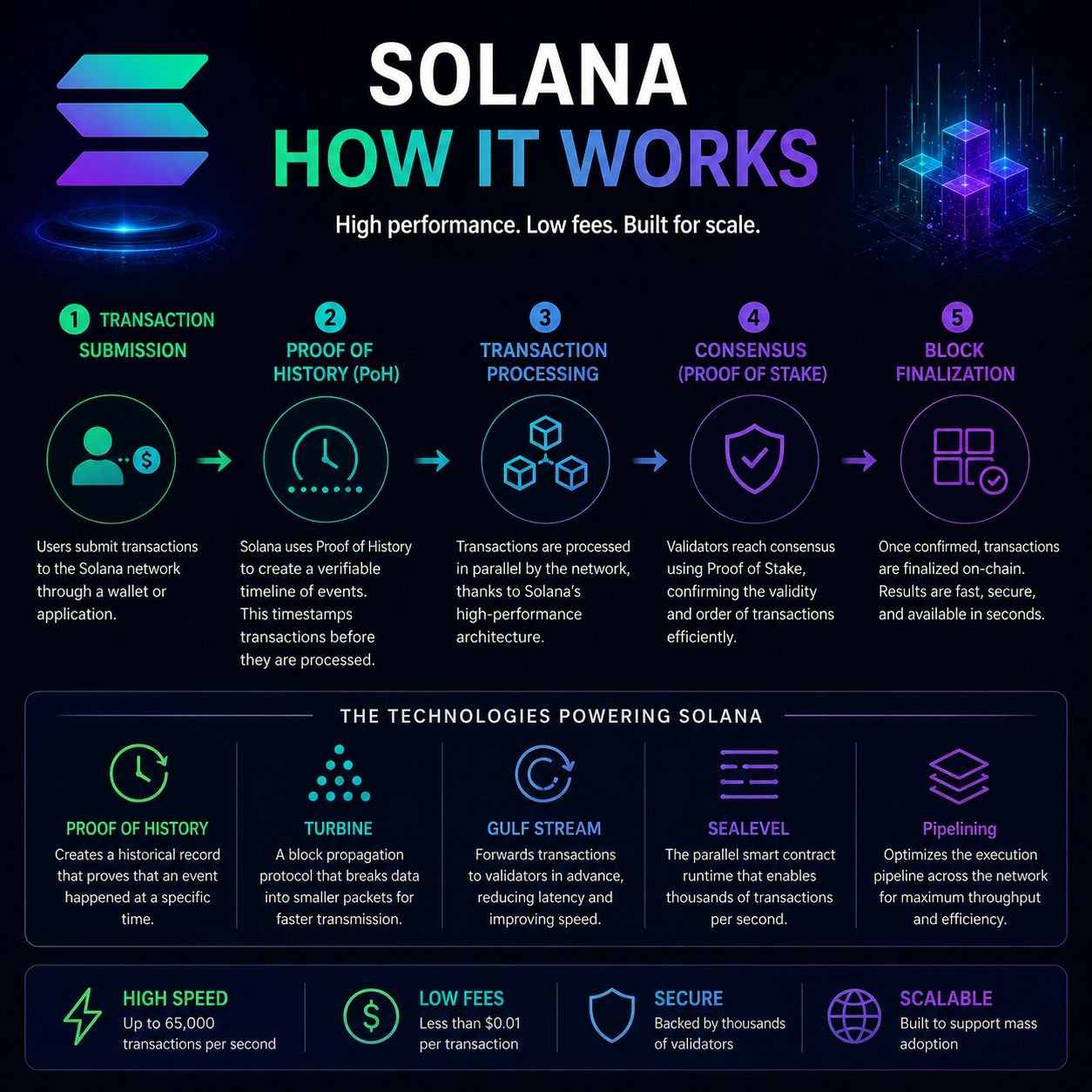
A proper Solana explained analysis requires understanding its core technology.
Proof of History (PoH)
At the heart of Solana lies a unique innovation: Proof of History. This system creates a cryptographic timestamp that allows the network to verify the order of transactions without requiring constant communication between validators.
In simple terms, it acts as a decentralized clock, drastically improving efficiency.
Proof of Stake (PoS)
Solana combines Proof of History with Proof of Stake, where validators secure the network by staking SOL tokens. This hybrid model ensures both security and scalability.
Parallel Processing (Sealevel)
Another key component in this Solana explained breakdown is Sealevel, Solana’s parallel execution engine.
Unlike many blockchains that process transactions one by one, Solana can handle multiple smart contracts simultaneously, significantly increasing throughput.
Key Performance Metrics
Understanding Solana also means looking at its performance:
- Up to 65,000 transactions per second (theoretical)
- Average fees below $0.01
- Block times around 400 milliseconds
These metrics explain why Solana is often considered one of the fastest blockchains available today.
Why Solana Is Different From Other Blockchains
A key part of this Solana explained guide is understanding what truly sets Solana apart from other networks.
Most traditional blockchains, including early versions of Ethereum, process transactions sequentially. This creates bottlenecks during periods of high demand, leading to slow confirmations and high fees.
Solana takes a fundamentally different approach by optimizing every layer of its architecture.
First, its use of Proof of History allows the network to pre-order transactions before they are validated. This significantly reduces latency and increases efficiency.
Second, Solana’s parallel execution model enables multiple smart contracts to run simultaneously. This is a major advantage over blockchains that process transactions one at a time.
Third, Solana optimizes how data is transmitted across the network. Technologies like Turbine (block propagation) and Gulf Stream (transaction forwarding) ensure that information moves quickly and efficiently between nodes.
Together, these innovations create a system capable of handling massive throughput without relying on Layer 2 scaling solutions.
Another differentiating factor highlighted in this Solana explained analysis is user experience. Many Solana-based applications feel fast and smooth, similar to traditional Web2 apps. This is critical for onboarding mainstream users who are not familiar with blockchain technology.
In contrast, networks with high fees and slow confirmation times often create friction, limiting adoption.
A Deep Dive Into the Solana Ecosystem
To further expand this Solana explained guide, it’s important to look at the ecosystem itself.
Solana is no longer just a blockchain—it is an entire digital economy.
DeFi Expansion
The DeFi ecosystem on Solana has grown significantly, offering fast and low-cost alternatives to traditional finance. Users can trade, lend, borrow, and earn yield with minimal friction.
NFT Innovation
Solana has positioned itself as a major player in the NFT space. Its low fees make it ideal for creators launching large collections or experimenting with new formats.
DePIN and Real-World Infrastructure
One of the most exciting developments in recent years is the rise of DePIN projects on Solana. These networks connect blockchain technology with real-world infrastructure, such as wireless networks, data storage, and energy systems.
AI and Crypto Integration
As highlighted in this Solana explained analysis, the integration of artificial intelligence with blockchain is an emerging trend. Solana’s performance makes it particularly suitable for AI-driven applications.
Why Solana Matters in 2026
This Solana explained article wouldn’t be complete without looking at its current position in the market.
After several years of growth, challenges, and improvements, Solana has established itself as a major player in the crypto ecosystem.
A Growing Developer Ecosystem
Solana continues to attract developers building:
- DeFi protocols
- NFT platforms
- Web3 applications
- DePIN projects
This expansion strengthens the network’s long-term value.
Increasing Adoption
One of the most important aspects of understanding Solana is its adoption curve.
With fast transactions and low fees, many users prefer Solana-based applications over slower and more expensive alternatives.
Consumer-Focused Strategy
Unlike many blockchains, Solana has positioned itself as a consumer-friendly ecosystem. From mobile integrations to intuitive wallets, it aims to onboard non-technical users into Web3.
Use Cases: Solana Explained Through Real Applications
To better understand Solana’s potential, let’s explore its real-world use cases.
DeFi (Decentralized Finance)
Solana hosts a growing DeFi ecosystem with:
- Decentralized exchanges (DEXs)
- Lending protocols
- Yield farming platforms
Thanks to its speed, trading on Solana feels nearly instant.
NFTs
Solana has become a major hub for NFTs due to its low minting costs. Artists and creators can launch collections without worrying about high fees.
Gaming and Web3
Blockchain gaming requires performance—and this is where Solana excels. Many Web3 games are choosing Solana for its efficiency.
Payments
Payments represent another key component of Solana’s ecosystem.
With near-zero fees, Solana enables microtransactions and real-world payment solutions that are not practical on many other blockchains.
Strengths of Solana
High Speed
Solana’s architecture allows it to process thousands of transactions per second.
Low Fees
Transaction costs remain extremely low, making it accessible globally.
Expanding Ecosystem
The number of projects and users continues to grow.
Weaknesses and Risks
No analysis of Solana would be complete without addressing its downsides.
Network Outages
Solana has experienced outages in the past. Although improvements have been made, reliability remains a key point to watch.
Centralization Concerns
Running a validator requires powerful hardware, which raises concerns about decentralization compared to other networks.
Strong Competition
Solana competes with major ecosystems like Ethereum and emerging scalable blockchains.
Solana vs Ethereum
In any Solana explained comparison, Ethereum inevitably comes up.
| Feature | Solana | Ethereum |
|---|---|---|
| Speed | Very high | Moderate |
| Fees | Very low | Often high |
| Ecosystem | Growing | Mature |
| Decentralization | Debated | Strong |
While Ethereum remains dominant, Solana is gaining ground, especially in user-focused applications.
The Role of SOL Token
The SOL token plays a central role in the ecosystem:
- Paying transaction fees
- Staking to secure the network
- Supporting the overall economy of Solana
As adoption grows, demand for SOL could increase.
Future Outlook: Solana Explained for Investors
Looking ahead, several key factors will shape Solana’s future.
Adoption Growth
The more users adopt Solana applications, the stronger the network becomes.
Technical Improvements
Ongoing upgrades aim to improve stability and scalability.
Emerging Trends
Solana is well-positioned in sectors like:
- DePIN
- AI + crypto
- Web3 social platforms
Is Solana a Good Investment?
From an investment perspective, Solana offers both opportunities and risks.
Bull Case
- High scalability
- Strong ecosystem growth
- Increasing adoption
Bear Case
- Past outages
- Centralization concerns
- Competitive landscape
Investors should always conduct their own research.
Conclusion
This guide demonstrates why Solana remains one of the most promising blockchain ecosystems today. Its combination of speed, low fees, and growing adoption gives it a strong foundation for future growth.
However, its long-term success will depend on its ability to maintain stability, attract developers, and compete with other leading platforms.
Understanding Solana today means understanding one of the key infrastructures shaping the future of Web3.


Trader, investor and author specializing in cryptocurrencies, DeFi and Web3.
On Mediasnet, I share my market analysis, practical guides and research on crypto markets, decentralized protocols and emerging trends across the ecosystem.
Follow me on: Facebook – X (Twitter)
3 thoughts on “Solana explained to better understand its potential”
Comments are closed.