
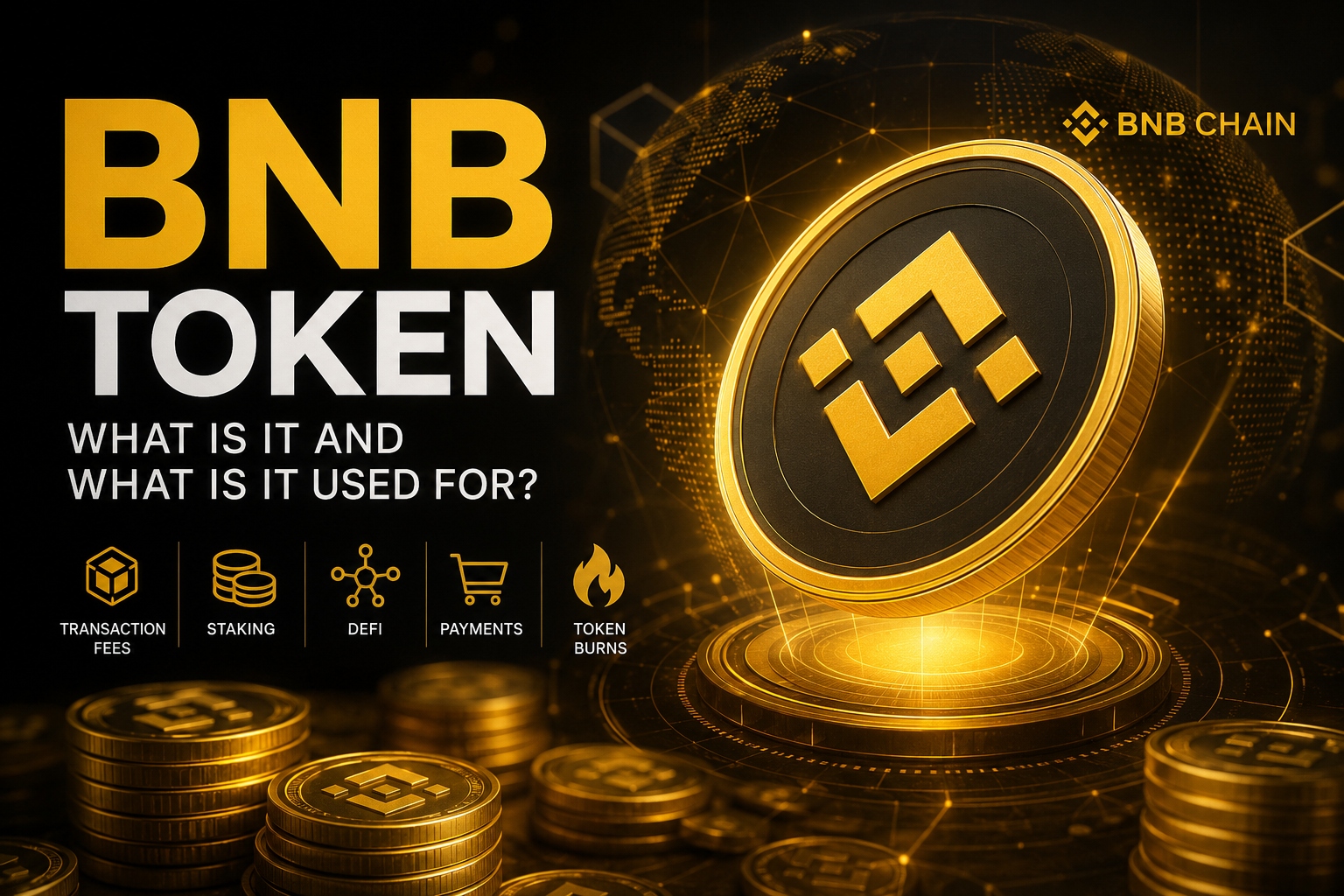
The BNB token is one of the most important crypto assets in the market. Closely associated with Binance, one of the world’s largest cryptocurrency exchanges, it has evolved far beyond its original role as a simple exchange fee discount token.
Today, BNB crypto is the native asset of the BNB Chain ecosystem. It is used to pay transaction fees, support staking, power decentralized applications, participate in network activity and contribute to the broader economy around BNB Smart Chain, opBNB and BNB Greenfield.
For many investors, the BNB token still looks like an exchange token. That is partly true, but incomplete. The asset began as Binance Coin, a utility token linked to the Binance exchange. Over time, it became the core asset of a much larger blockchain ecosystem.
This evolution is important because it changes the way the market analyzes BNB crypto. Instead of asking only whether Binance remains dominant, investors also need to ask a broader question: can BNB continue to capture value from blockchain activity, DeFi, trading, payments, staking, token burns and the future development of BNB Chain?
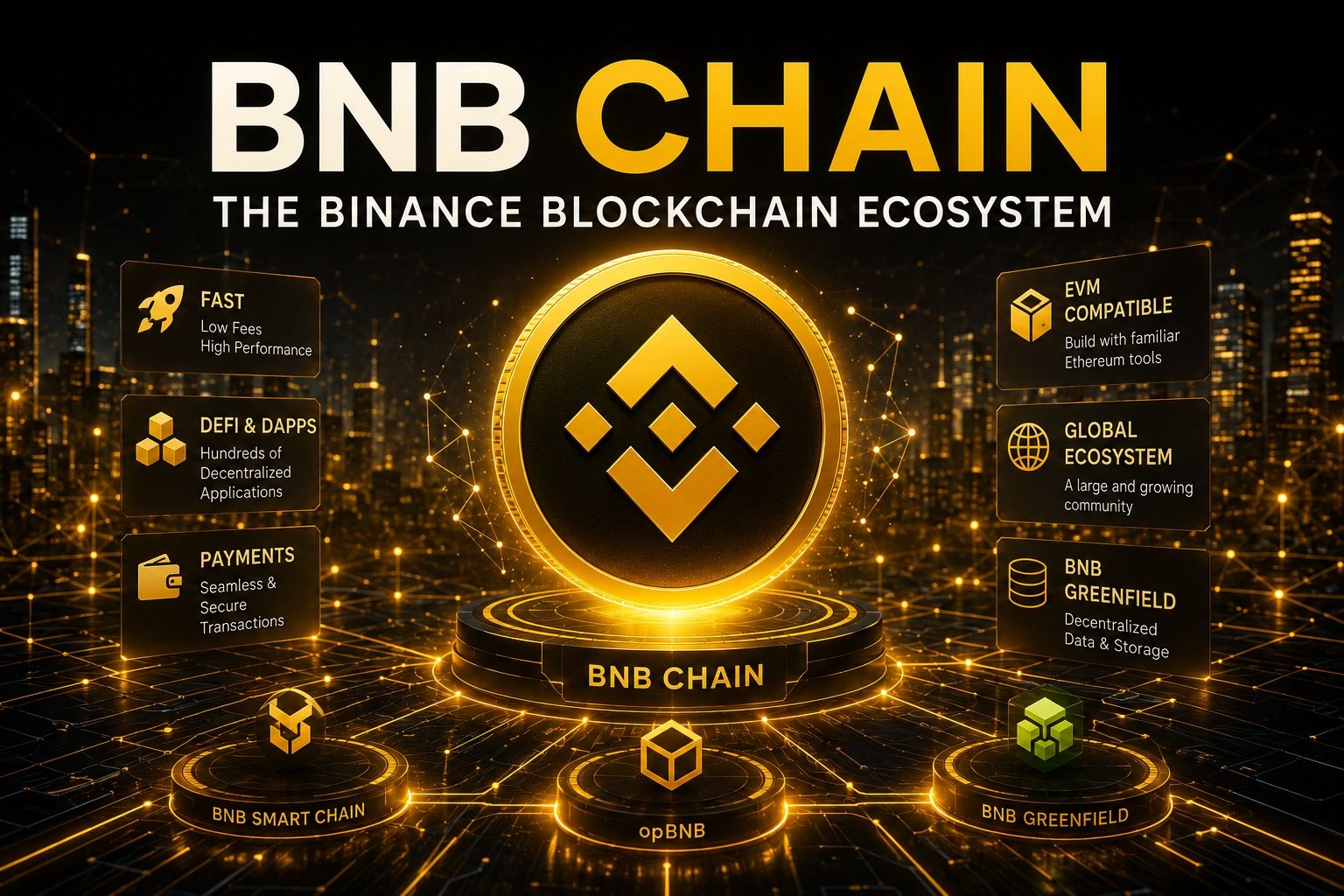
Related reading: before analyzing the BNB token itself, it is useful to understand the network behind it.
BNB Chain: What Is Binance’s Blockchain and Why Does It Matter?
What is the BNB token?
The BNB token is the native crypto asset of the BNB ecosystem. It was originally launched in 2017 as Binance Coin, an ERC-20 token on Ethereum. Its first major use case was simple: users could hold BNB to receive discounts on trading fees on Binance.
That original use case helped the token gain visibility quickly. Binance was growing fast, crypto trading volumes were rising, and exchange tokens became an important category during the early expansion of the market.
But the BNB token did not remain only an exchange discount token. After Binance launched its own blockchain infrastructure, BNB became the native asset used across the ecosystem. It moved from being mainly a token associated with an exchange to becoming the gas and utility asset of a public blockchain network.
Today, BNB crypto is used for transaction fees, staking, ecosystem incentives, DeFi activity, payments and on-chain applications. It is also affected by a long-running burn mechanism designed to reduce supply over time.
This dual identity is what makes the BNB token interesting. It is both a major crypto asset linked to one of the best-known brands in the industry and the native token of a blockchain ecosystem competing with Ethereum, Solana, Base, Avalanche and other smart contract networks.
Why was the BNB token created?
The BNB token was created to support the Binance ecosystem. At launch, its most visible purpose was to give users fee discounts on the Binance exchange. This helped create demand for the token while encouraging user loyalty.
The model was straightforward. If users traded actively on Binance, holding BNB could reduce their costs. In a market where traders care deeply about fees, this was a powerful incentive.
Over time, however, the project needed a broader purpose. A token cannot rely forever on exchange fee discounts alone. As the crypto market matured, utility became more important. Investors wanted to know whether BNB crypto had a role beyond Binance’s trading platform.
The development of BNB Chain answered that question. Once the BNB token became the native token used to pay gas fees and support blockchain activity, its utility expanded significantly.
That shift is important. A token linked only to a centralized exchange depends almost entirely on the business success and regulatory status of that exchange. A token connected to a broader blockchain ecosystem can also derive relevance from decentralized applications, DeFi activity, user adoption and developer growth.
From Binance Coin to BNB crypto: why did the name change?
BNB was originally known as Binance Coin. That name reflected its early identity. It was the token of the Binance exchange.
Later, the ecosystem moved toward the name BNB, often associated with the phrase “Build and Build.” This change was not only cosmetic. It reflected a strategic shift away from a purely exchange-centered identity.
The goal was to position BNB crypto as the native asset of a broader ecosystem rather than just a Binance exchange token. This is also why Binance Smart Chain was later renamed BNB Smart Chain, and the wider ecosystem became known as BNB Chain.
The rebranding matters for investors and users. It shows that the future of the BNB token is tied not only to Binance as a company, but also to the success of the blockchain infrastructure built around BNB.
However, market perception does not change overnight. Many people still call it Binance Coin. Many investors still associate BNB crypto directly with Binance. This connection remains one of the token’s biggest strengths and one of its biggest risks.
What is the BNB token used for?
The BNB token has several important use cases. Some are linked to Binance, while others are linked to BNB Chain and on-chain activity.
Paying transaction fees
BNB is used to pay gas fees on BNB Smart Chain. Whenever users send tokens, interact with smart contracts, use DeFi protocols, bridge assets or execute transactions on the network, they need BNB to pay transaction costs.
This is similar to how ETH is used on Ethereum or SOL is used on Solana. The native token acts as the fuel of the network.
This use case is important because it connects BNB crypto demand to actual blockchain activity. If more users interact with decentralized applications, make payments, trade on-chain or use BNB Chain infrastructure, more transactions require the token for fees.
Exchange fee discounts
The BNB token is still associated with fee discounts on Binance. For many users, this remains one of the most familiar use cases. Traders who use Binance may hold BNB to reduce trading costs, depending on the exchange’s rules and available programs.
This use case is less revolutionary than DeFi or blockchain infrastructure, but it remains practical. Crypto traders often care about small fee differences, especially when trading frequently or at higher volume.
Staking and network participation
BNB can be used in staking and delegation within the ecosystem. Users can participate in network activity by delegating tokens to validators, helping secure the network and potentially earning rewards.
This gives BNB crypto another role beyond transaction fees. It becomes part of the mechanism that supports validation and network security.
DeFi applications
BNB is widely used in decentralized finance. It can be paired with other tokens in liquidity pools, used in lending protocols, supplied as collateral or traded on decentralized exchanges.
Platforms such as PancakeSwap helped make the BNB ecosystem popular among retail DeFi users because transactions were fast and relatively inexpensive compared with Ethereum mainnet during periods of high congestion.
If you follow DeFi News, the BNB token remains an important asset to watch because its activity reflects several key trends in decentralized finance: low-cost trading, liquidity competition, stablecoin transfers, cross-chain bridges and automated on-chain applications.
Payments
BNB can also be used for payments. Some merchants, crypto services and payment processors support it as a settlement or spending asset. While stablecoins dominate many payment use cases, BNB crypto remains part of the broader crypto payment ecosystem.
Its usefulness for payments depends on fees, liquidity, volatility and merchant acceptance. Like most non-stablecoin assets, it can be practical in some crypto-native contexts but less ideal for users who want price stability.
Launchpads and ecosystem access
The BNB token has also been used in launchpad-style products, ecosystem campaigns, token sales and access mechanisms. This helped create additional demand during periods when Binance-related launch products were popular.
These use cases can be powerful during bullish markets, but they are also cyclical. Demand linked to new token launches tends to rise when market sentiment is strong and decline when investors become more cautious.
Key idea
The BNB token is not used for one single purpose. Its value proposition comes from a combination of exchange utility, gas fees, staking, DeFi activity, ecosystem access, payments and supply reduction through token burns.
How does BNB crypto work on BNB Chain?
BNB crypto is the native asset of BNB Chain. This means it plays a direct role in how the network functions.
On BNB Smart Chain, users need BNB to pay transaction fees. These transactions can include simple transfers, token swaps, DeFi interactions, NFT activity, gaming transactions, bridging operations or smart contract execution.
The token is also used in staking and validation. Validators help produce blocks and secure the network, while delegators can support validators by staking their BNB. This creates an economic relationship between token holders and network operations.
This is a major difference between BNB as an exchange token and BNB as a blockchain asset. An exchange token depends mainly on platform usage. A blockchain token also depends on network usage.
For investors, this distinction matters because it changes the analysis. To understand the BNB token, it is not enough to look at Binance trading activity. One must also consider BNB Chain adoption, DeFi usage, developer activity, transaction demand, security and competition from other networks.
What is the BNB token burn mechanism?
One of the most important features of the BNB token is its burn mechanism. A token burn permanently removes tokens from circulation, reducing supply.
BNB uses an Auto-Burn system designed to gradually reduce total supply toward 100 million BNB. The burn amount adjusts based on factors such as the BNB price and the number of blocks produced on BNB Smart Chain during the quarter.
This system is designed to make burns more transparent and predictable than discretionary buyback-style mechanisms.
In addition to quarterly burns, BNB also has a real-time burning mechanism through BEP-95. Under this system, a portion of gas fees is burned based on network activity. This means that higher on-chain usage can contribute to additional supply reduction.
The burn mechanism is one of the main reasons investors pay close attention to BNB crypto tokenomics. In theory, reducing supply can support scarcity if demand remains stable or increases. However, burns do not guarantee price appreciation. Market conditions, demand, regulation, liquidity and investor sentiment still matter.
Why do BNB token burns matter?
Token burns matter because they affect supply. In traditional markets, investors often look at share buybacks as a way for companies to reduce the number of shares outstanding. In crypto, burns can play a similar psychological and economic role, although the mechanics are different.
For the BNB token, burns are part of the long-term token design. The objective is to reduce total supply over time. This can make the asset more attractive to investors who value scarcity.
But token burns should not be misunderstood. A burn does not automatically make a token valuable. If demand falls faster than supply is reduced, the price can still decline. If regulatory risk rises, investors may still sell. If blockchain activity weakens, the token may lose momentum.
The best way to analyze burns is to see them as one part of the broader picture. They can improve tokenomics, but they cannot replace real utility, strong adoption and market confidence.
BNB crypto tokenomics: what investors should understand
BNB crypto tokenomics are built around utility and supply reduction.
The token began with a much larger supply and has been gradually reduced through burn mechanisms. The long-term goal is to bring supply down to 100 million BNB. This makes BNB different from tokens with unlimited inflation or unclear supply policies.
The main tokenomics elements to understand are:
- Utility: BNB is used for gas fees, staking, exchange fee discounts, DeFi, payments and ecosystem access.
- Burns: quarterly Auto-Burn and real-time gas fee burns reduce supply over time.
- Network demand: on-chain activity can increase the practical need for BNB.
- Market perception: the token remains closely linked to Binance in the eyes of investors.
- Regulation: legal pressure on Binance can affect sentiment around the asset.
For long-term investors, the key issue is whether demand can remain strong while supply continues to decrease. That is the basic bullish thesis for the BNB token. The bearish thesis is that regulatory pressure, centralization concerns or competition could weaken demand despite the burn mechanism.
Is BNB crypto still linked to Binance?
Yes. Even though the ecosystem has tried to present BNB as more than Binance Coin, the link remains strong.
This connection has advantages. Binance is one of the most recognized brands in crypto. Its visibility helped the BNB token become one of the largest crypto assets by market capitalization. Many users first discovered the token through Binance products.
But this connection is also a risk. When Binance faces regulatory pressure, legal challenges or reputational issues, BNB crypto can be affected by market perception. Even if BNB Chain is not the same thing as the Binance exchange, investors often treat them as closely related.
This is one of the central contradictions of the token. Its association with Binance helped make it successful, but that same association can increase regulatory and reputational risk.
The BNB token as an exchange token
The BNB token remains one of the most successful examples of an exchange-linked token. Its early model was simple and effective: hold the token, get benefits on the exchange.
This helped create a strong foundation. Traders had a practical reason to buy and use BNB. Binance had an incentive to support the token’s role in its ecosystem. The burn mechanism also gave investors a supply-reduction narrative.
However, exchange tokens can be risky. Their value often depends heavily on the success, reputation and regulatory position of the exchange behind them. If the exchange loses market share, faces major restrictions or suffers a trust crisis, the token can be affected.
This is why the evolution of BNB crypto into a blockchain ecosystem asset is important. The more utility it has outside the exchange, the less it depends on a single use case.
The BNB token as a blockchain asset
The BNB token is also a blockchain token, similar in function to ETH on Ethereum or SOL on Solana. It pays for transaction fees, supports network operations and participates in the economics of decentralized applications.
This gives BNB a broader role than many exchange tokens. If BNB Chain continues to attract users, applications and transaction volume, the token can maintain relevance through on-chain utility.
That said, competition is intense. Ethereum has the deepest liquidity and strongest developer base. Solana offers fast execution and strong retail adoption. Base benefits from Coinbase’s distribution. Avalanche focuses on customizable blockchain infrastructure. BNB must compete in this crowded market.
For investors, the question is whether BNB Chain can keep enough activity to support the long-term utility of BNB crypto.
BNB crypto and DeFi
DeFi is one of the most important sources of utility for BNB crypto. The token is used in liquidity pools, decentralized exchanges, lending platforms and yield strategies.
BNB Smart Chain became popular because it allowed users to access DeFi with lower fees than Ethereum mainnet. This was especially attractive to retail users who wanted to experiment with token swaps, farming and liquidity provision without paying high gas fees.
PancakeSwap became one of the most visible applications in the ecosystem. It helped establish BNB Chain as a major DeFi network and gave the BNB token additional utility as a core asset in trading pairs and liquidity pools.
However, DeFi activity is cyclical. During bull markets, users chase yield and new opportunities. During bear markets, liquidity can decline quickly. This means BNB’s DeFi-related demand can fluctuate significantly.
BNB crypto and stablecoins
Stablecoin activity is another important part of the BNB ecosystem. Users often transfer dollar-pegged tokens across low-cost networks, and BNB Chain has been one of the networks used for this purpose.
Stablecoin transfers matter because they create practical blockchain usage beyond speculation. People use stablecoins for trading, payments, savings, settlement and cross-border transfers.
The BNB token benefits indirectly from this activity because users need the native token to pay transaction fees. If stablecoin transfers increase on the network, demand for gas also increases.
However, stablecoin activity is highly competitive. Tron, Ethereum, Solana, Base and other networks also compete for this flow. Low fees alone are not enough. Liquidity, reliability, exchange support and user habits all matter.
BNB crypto and AI agents
BNB crypto is also becoming relevant to discussions around AI agents and automated on-chain activity.
BNB Chain’s roadmap includes infrastructure for AI agents, including payment abstraction and agent identity systems. The idea is that autonomous software agents could eventually use blockchain networks to send payments, execute transactions, interact with DeFi protocols and manage on-chain workflows.
This does not mean the BNB token is only an AI token. It is not. Its core utility remains transaction fees, staking, DeFi, payments and ecosystem activity.
But if AI agents become a real blockchain use case, fast and low-cost networks could benefit. BNB could then play a role as the gas and settlement asset for automated activity on its ecosystem.
Important: AI is a future growth narrative for BNB Chain, but it should not be the only reason to analyze the BNB token. The asset’s current value still depends mainly on exchange utility, network usage, DeFi activity, burns, liquidity and market confidence.
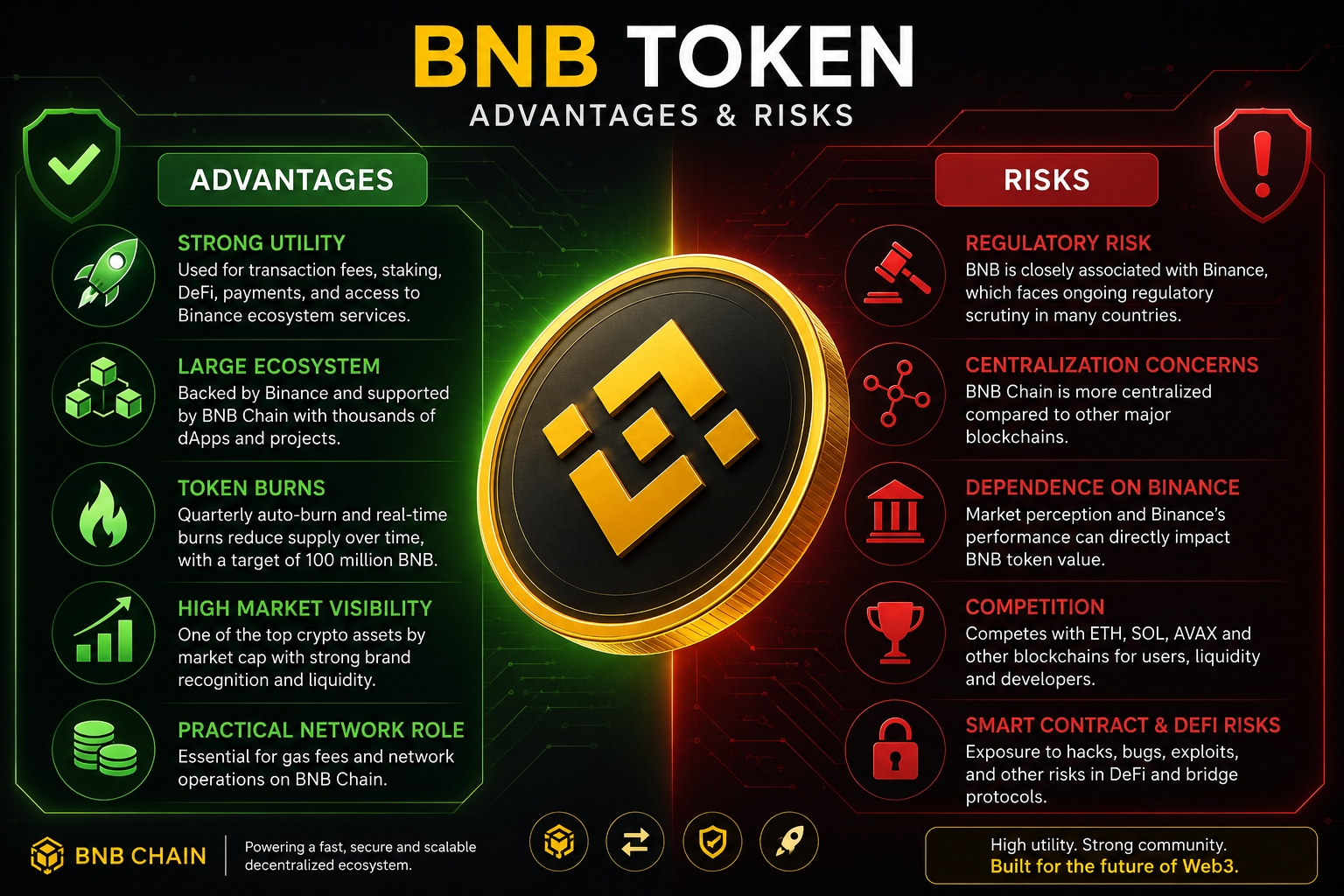
Advantages of the BNB token
Strong utility
The BNB token has multiple use cases. It is used for transaction fees, staking, exchange discounts, DeFi, payments and ecosystem participation. This gives it broader utility than many tokens that rely only on speculation.
Large ecosystem
The asset is connected to a major blockchain ecosystem with decentralized applications, wallets, bridges, DeFi protocols, games and infrastructure tools.
Supply reduction
The burn mechanism is an important part of the BNB crypto investment narrative. Quarterly Auto-Burn and real-time burns reduce supply over time, with the long-term objective of reaching 100 million BNB.
High market visibility
BNB is one of the most recognized crypto assets. Its connection to Binance gives it strong visibility among retail and institutional market participants.
Practical network role
Because the token is used for gas fees, it has a practical function inside the ecosystem. This makes it more than a passive speculative asset.
Risks of the BNB token
Regulatory risk
The biggest risk for the BNB token is regulation. Because BNB remains closely associated with Binance, legal or regulatory pressure on the exchange can affect investor sentiment toward the token.
Centralization concerns
BNB Chain is often criticized for being more centralized than Ethereum. Its validator structure and historical connection to Binance can raise concerns for users who prioritize decentralization.
Dependence on Binance
Even though BNB crypto has expanded beyond exchange utility, market perception still links it strongly to Binance. If Binance loses market share or faces reputational damage, BNB could suffer.
Competition
BNB competes indirectly with ETH, SOL, AVAX and other native blockchain assets. If users and developers move to competing ecosystems, demand for BNB could weaken.
DeFi and smart contract risk
Because BNB is used across decentralized applications, it is exposed to the broader risks of DeFi: hacks, bridge failures, smart contract bugs, rug pulls and liquidity shocks.
Burns do not guarantee price growth
Supply reduction can support the investment narrative, but it does not guarantee higher prices. Demand, liquidity, macro conditions and regulation still matter.
BNB token vs ETH, SOL and AVAX
The BNB token is often compared with other major blockchain tokens. The comparison is useful because these assets all play a role in smart contract ecosystems.
ETH is the native asset of Ethereum. It benefits from the strongest developer base, deep liquidity, institutional credibility and a highly decentralized settlement layer. However, Ethereum mainnet can still be expensive during congestion.
SOL powers Solana, a network known for speed, low fees and strong retail adoption. Solana has become a major competitor in trading, meme coins, consumer applications and high-frequency on-chain activity.
AVAX powers Avalanche, an ecosystem focused on fast finality, customizable blockchain infrastructure and subnet-style architecture.
BNB crypto stands out because it combines exchange-linked utility with blockchain utility. This makes it different from ETH, SOL and AVAX. It is not only a gas token. It is also tied to one of the largest crypto brands in the world.
This combination can be powerful, but it also creates specific risks. ETH is mostly analyzed as Ethereum’s native asset. SOL is mostly analyzed through Solana’s ecosystem. BNB, however, is analyzed through both BNB Chain activity and Binance-related market perception.
Is the BNB token a good long-term investment?
Whether the BNB token is a good long-term investment depends on the investor’s risk profile, time horizon and view of the crypto market.
The bullish case is clear. BNB has strong brand recognition, real utility, a large ecosystem, exchange-related use cases, on-chain demand and a supply reduction mechanism. If Binance remains important and BNB Chain continues to grow, the token could remain one of the major crypto assets.
The bearish case is also clear. BNB crypto carries regulatory risk, centralization concerns and strong dependence on Binance’s reputation. Competition from Ethereum, Solana, Base, Avalanche and other networks could also limit its growth.
For long-term investors, BNB should not be analyzed only through price charts. It requires a fundamental view of Binance, BNB Chain, token burns, DeFi activity, regulatory pressure and the broader crypto cycle.
What could drive the BNB token higher?
Several factors could support the BNB token over time.
- Higher activity on BNB Chain;
- Growth in DeFi applications;
- More stablecoin transfers on the network;
- Increased use of BNB for fees and staking;
- Continued token burns;
- Positive sentiment around Binance;
- Adoption of AI agent infrastructure;
- Broader crypto market strength.
The most powerful scenario would combine several of these factors at once. For example, if the crypto market enters a strong cycle, Binance remains dominant, BNB Chain activity increases and burns continue, the investment narrative around BNB crypto could strengthen.
What could hurt BNB crypto?
Several factors could weaken BNB crypto.
- Major regulatory action against Binance;
- Declining market share for Binance;
- Lower activity on BNB Chain;
- Security incidents or bridge hacks;
- Loss of developer interest;
- Competition from faster or more decentralized chains;
- Weak crypto market conditions;
- Reduced demand for exchange tokens.
The most important risk is still regulatory. Because the market connects BNB so strongly with Binance, negative headlines around the exchange can quickly affect token sentiment.
How should beginners understand the BNB coin?
For beginners, the easiest way to understand the BNB token is to see it as a multi-purpose crypto asset with three main roles.
First, it is an exchange-linked asset. It has historical utility inside the Binance ecosystem.
Second, it is a blockchain gas token. It is used to pay transaction fees and interact with BNB Chain applications.
Third, it is a token with a supply-reduction mechanism. Burns are designed to reduce total supply over time.
These three roles make BNB crypto different from many crypto assets. But they also make it more complex. To analyze it properly, investors need to understand both Binance and BNB Chain.
Common mistakes when analyzing BNB crypto
Thinking BNB is only an exchange token
This is outdated. Exchange utility remains important, but BNB also powers blockchain activity across BNB Chain.
Ignoring regulatory risk
BNB’s connection to Binance is a major part of its identity. Investors should always consider regulatory and reputational risk.
Assuming burns guarantee price growth
Burns reduce supply, but they do not guarantee higher prices. Demand must remain strong.
Ignoring competition
BNB competes with other native assets such as ETH, SOL and AVAX. Network activity matters.
Confusing BNB with BNB Chain
BNB is the token. BNB Chain is the blockchain ecosystem. They are closely connected, but they are not the same thing.
Conclusion: the BNB token is more than Binance Coin
The BNB token began as Binance Coin, a utility token designed to reduce trading fees on Binance. But it has evolved into something larger.
Today, BNB crypto is the native asset of BNB Chain. It is used for gas fees, staking, DeFi, payments, ecosystem participation and blockchain activity. It is also supported by a burn mechanism designed to reduce supply over time.
This makes BNB one of the most important crypto assets to understand. Its strength comes from utility, visibility, liquidity and ecosystem depth. Its risks come from regulation, centralization concerns, competition and its ongoing association with Binance.
For investors, the key question is not simply whether the BNB token was successful in the past. It was. The real question is whether it can remain relevant in a market where blockchains, exchanges, DeFi protocols and AI-driven applications are all competing to define the next phase of crypto.
FAQ about the BNB token
What is the BNB token?
BNB is the native crypto asset of the BNB ecosystem. It is used for transaction fees, staking, DeFi activity, payments, exchange-related benefits and participation in the broader blockchain network.
Was BNB originally called Binance Coin?
Yes. BNB was originally known as Binance Coin. The name later evolved as the ecosystem moved beyond exchange utility and became more closely linked to BNB Chain.
What is BNB crypto used for?
BNB crypto is used to pay gas fees, support staking, access certain exchange benefits, participate in DeFi applications, provide liquidity and interact with blockchain-based services.
Is the BNB coin the same as BNB Chain?
No. BNB is the token. BNB Chain is the blockchain ecosystem where the token is used for fees, staking and on-chain activity.
How does the BNB burn work?
The token uses an Auto-Burn system designed to reduce supply over time, along with a real-time burn mechanism linked to gas fees. The long-term goal is to reduce total supply to 100 million BNB.
Why are BNB token burns important?
Burns permanently remove tokens from circulation. This can support the scarcity narrative, but it does not guarantee price growth because demand and market conditions still matter.
Is BNB only useful on Binance?
No. Binance-related utility remains important, but the token is also used across BNB Chain for transaction fees, staking, DeFi and decentralized applications.
Is BNB crypto a DeFi token?
It is not only a DeFi token, but it plays an important role in DeFi activity on BNB Chain, especially through decentralized exchanges, liquidity pools and lending protocols.
What are the main risks of the BNB token?
The main risks include regulatory pressure, centralization concerns, dependence on Binance’s reputation, smart contract risks, competition from other ecosystems and volatility.
Can BNB crypto benefit from AI agents?
Potentially. BNB Chain’s roadmap includes infrastructure for AI agents and automated applications. If these use cases grow, the token could benefit from increased network activity, but AI is not its only use case.
Disclaimer
This article is for informational and educational purposes only. It is not financial advice, investment advice or a recommendation to buy or sell any cryptocurrency. Digital assets are volatile and involve significant risk. Always do your own research and consult a qualified professional if needed.


Trader, investor and author specializing in cryptocurrencies, DeFi and Web3.
On Mediasnet, I share my market analysis, practical guides and research on crypto markets, decentralized protocols and emerging trends across the ecosystem.
Follow me on: Facebook – X (Twitter)