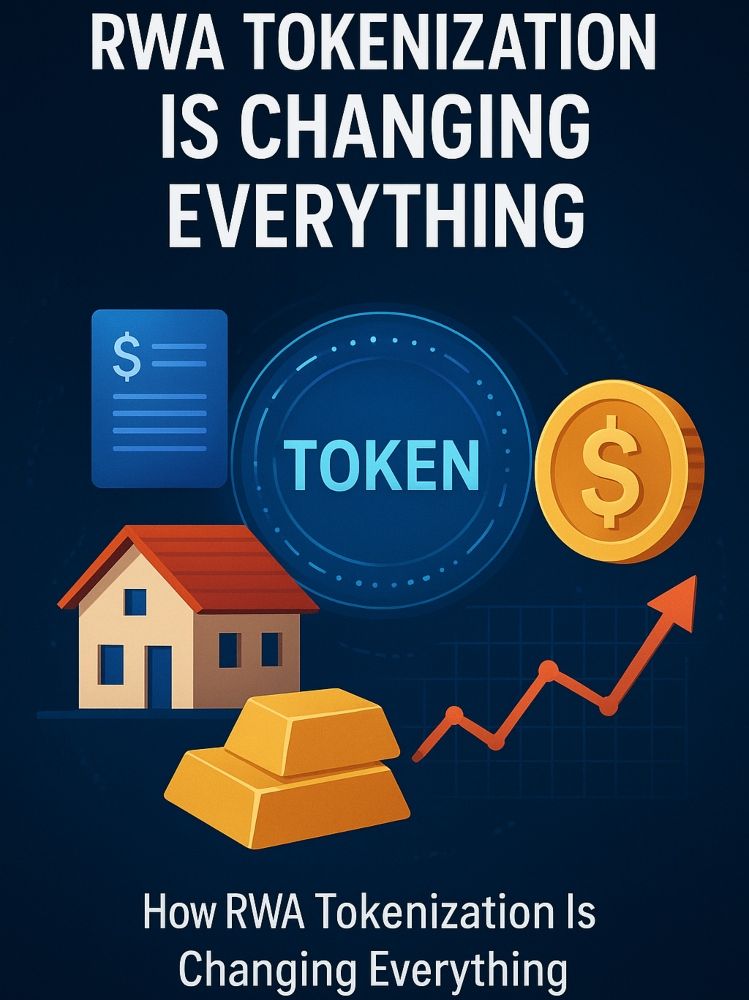
RWA Tokenization: when the real world enters the blockchain. It’s a topic that’s increasingly being discussed and cannot be ignored, but what exactly is it? Explanations and examples.
RWA Tokenization, blockchain, financial revolution—these are just a few of the topics that point to the gradual arrival of a major change in the financial world at the international level.
If you follow the news on decentralized finance, crypto, and Web3, you have probably already heard about it. But do you really know what RWA tokenization means? What exactly is it? That is what we are going to find out together through several approaches and concrete examples.
RWA Tokenization: How Real-World Assets Are Changing Everything
The tokenization of Real-World Assets (RWA) is quietly reshaping the global financial landscape. If Bitcoin revolutionized money, RWA tokenization is now redefining value itself — turning tangible assets like real estate, bonds, and gold into blockchain-based tokens that can be traded 24/7.
In short, the real economy is entering Web3, and it’s happening faster than most realize.
What Are RWAs?
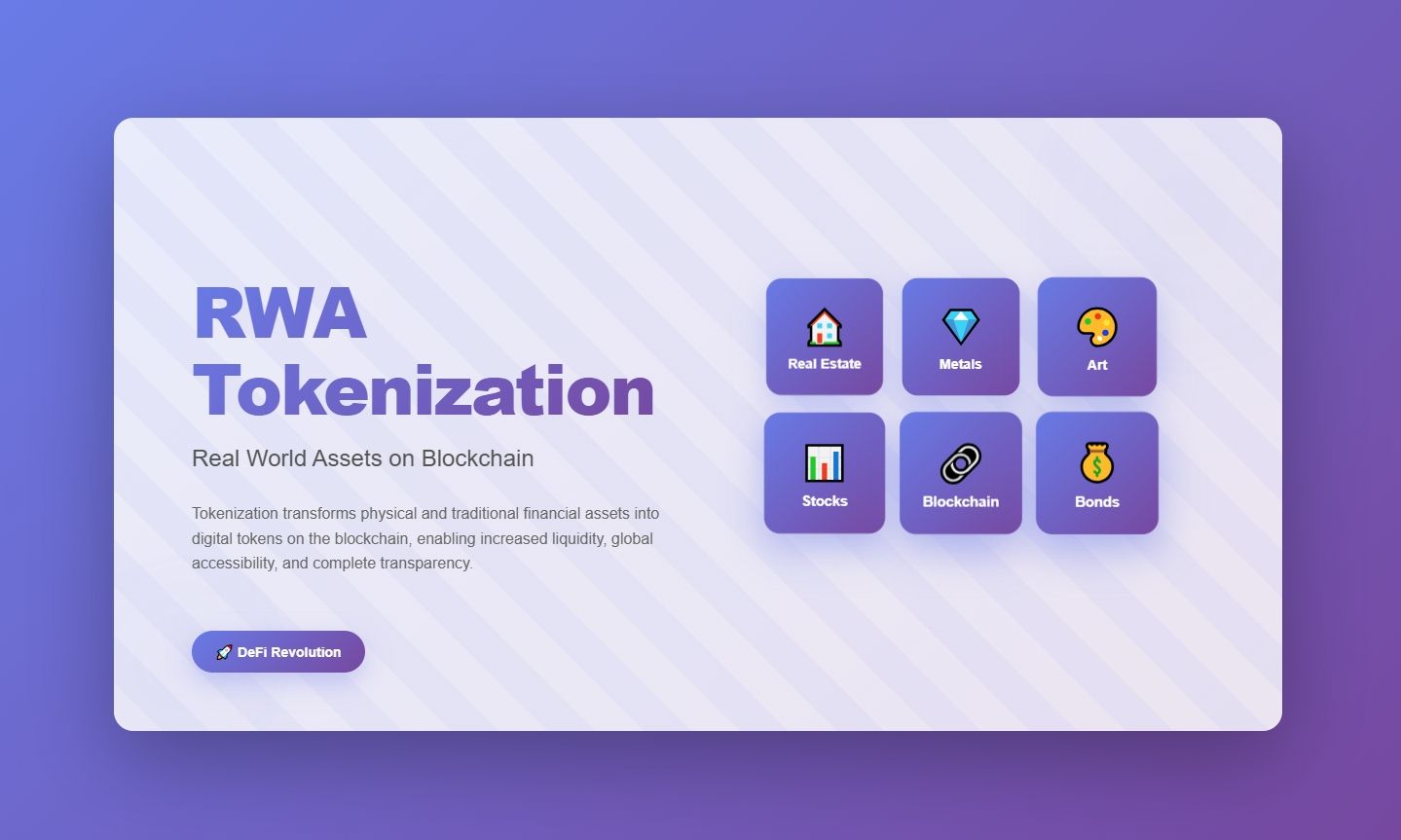
RWA stands for Real-World Assets — any physical or traditional financial asset that can be represented digitally on a blockchain.
This includes real estate, commodities, artwork, bonds, credit instruments, and even revenue streams or invoices.
Through tokenization, each asset becomes a digital token representing ownership or economic rights. These tokens can be fractionalized, traded, or used as collateral within decentralized finance (DeFi) ecosystems, while being fully traceable and transparent.
The promise is immense: making illiquid assets liquid, exclusive investments accessible, and traditional finance programmable.
How RWA Tokenization Works
RWA tokenization typically follows three key steps:
-
Selecting the real-world asset – for example, a rental property in Texas, a corporate bond, or a kilo of gold.
-
Issuing a digital token – representing fractional ownership or participation rights, stored on a blockchain like Ethereum, Polygon, Avalanche, or Lumia.
-
Securing the underlying asset – through a regulated custodian or trustee who ensures legal ownership and compliance.
The result is a hybrid model where traditional finance meets blockchain efficiency — bringing trust, transparency, and liquidity to once-inaccessible markets.
RWA Tokenization Is Booming in 2025
RWA tokenization has moved beyond experimentation — it’s scaling fast.
According to Boston Consulting Group, tokenized real-world assets could exceed $10 trillion in value by 2030, compared to roughly $30 billion today.
The reasons for this explosive growth are clear:
-
Yield and stability: tokenized treasuries and bonds offer stable on-chain returns.
-
Accessibility: fractional ownership lowers the barrier for global investors.
-
⚙️ Mature infrastructure: networks like Ethereum, Stellar, and Avalanche now support secure, compliant RWA issuance.
-
️ Regulatory evolution: the EU’s MiCA framework and new U.S. guidelines are paving the way for tokenized securities.
Real Companies Leading the RWA Revolution
RWA tokenization is no longer theoretical — it’s happening across multiple sectors.
Here are some of the most notable projects and companies driving adoption today
-
️ RealT — based in the U.S., RealT allows investors to buy fractional shares of rental properties, earning weekly income in stablecoins like USDC. It’s one of the clearest use cases of tokenized real estate.
-
Ondo Finance — a leader in tokenized U.S. Treasuries, offering tokens such as USDY, which bridge traditional fixed-income products and DeFi yields.
-
Franklin Templeton — one of the world’s largest asset managers, now runs a tokenized money market fund directly on the Stellar and Polygon blockchains, offering regulated exposure to RWAs.
-
Maple Finance and Centrifuge — these DeFi protocols tokenize real-world credit and loans, bringing corporate debt and trade finance into blockchain-based liquidity pools.
-
Tether Gold (XAUT) and PAX Gold (PAXG) — both allow investors to own tokenized gold, backed 1:1 by physical bullion stored in secure vaults.
-
Securitize and Tokeny — regulated platforms that provide compliant infrastructures for issuing tokenized securities, used by real estate funds and private equity firms worldwide.
Each of these examples demonstrates that tokenization isn’t a futuristic concept — it’s already being adopted by institutions, startups, and DeFi protocols alike.
Why RWA Tokenization Matters
The benefits are both economic and systemic:
-
Liquidity and access: assets that once required large capital commitments can now be traded in small fractions.
-
Transparency: blockchain-based ownership eliminates opacity and fraud risks.
-
Efficiency: token transfers and payments are automated through smart contracts.
-
24/7 markets: no closing bell — assets trade anytime, anywhere.
Ultimately, RWA tokenization democratizes finance, empowering individuals to invest directly in real assets that were once out of reach.
Challenges and the Path Forward
Despite the excitement, several hurdles remain:
-
Legal uncertainty: jurisdiction and property rights need consistent frameworks.
-
Custody and compliance: ensuring asset safety is critical for institutional adoption.
-
Liquidity gaps: secondary markets are still developing.
-
Interoperability: smooth cross-chain transfer standards are still evolving.
But with traditional giants like BlackRock, Goldman Sachs, and Franklin Templeton experimenting with tokenized funds, confidence in the sector is rising rapidly.
The Future of RWA Tokenization
RWA tokenization represents the next major phase of blockchain adoption — where on-chain finance meets the real economy.
Soon, owning a share of a New York skyscraper, a Treasury bond, or even a bar of gold could be as simple as holding a token in your crypto wallet.
As the lines blur between TradFi and DeFi, RWA tokenization is setting the stage for a more transparent, inclusive, and programmable global financial system.
In Short
RWA tokenization changes everything.
It bridges the gap between traditional assets and digital finance — unlocking global access to real-world value.
The next financial revolution won’t just be digital.
It will be tokenized.